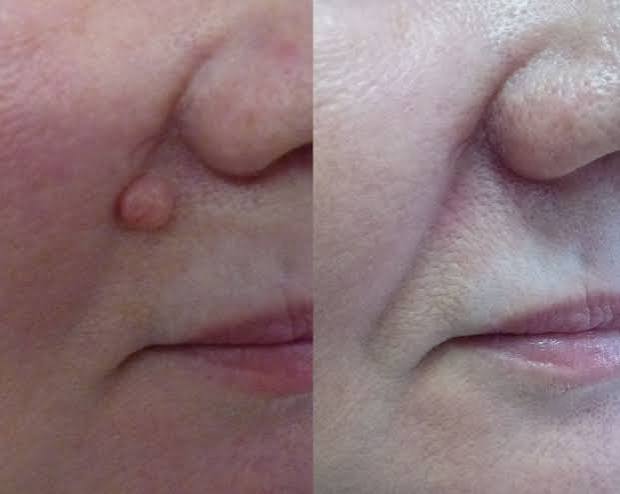
MOLE REMOVAL
What is mole removal?
Moles (naevi) are common skin growths made up of clusters of pigment-producing cells. Most are harmless, but some people choose to have a mole removed because it catches on clothing, jewellery or razors, or because it affects how they feel about their appearance. Others need a mole removed for medical reasons, such as when it has changed or looks unusual. At our North Sydney clinic, mole removal is carried out as a medical procedure, following an assessment by a doctor.
A full skin check is required before treatment
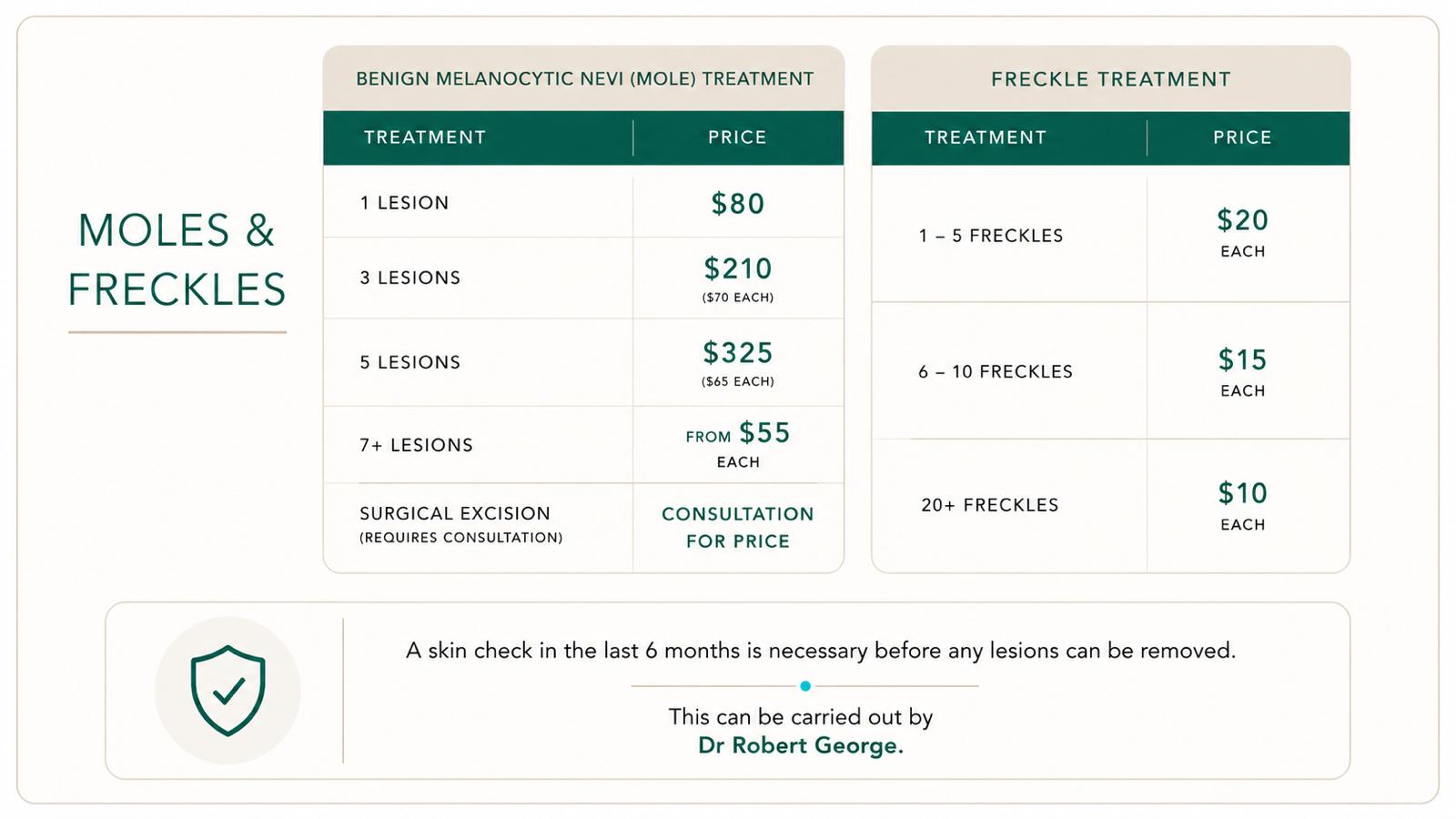
Before we can remove any mole, you must have had a full skin check within the past 6 months. This can be done by Dr Robert George or by your own GP. You will need to provide a referral as evidence that your skin check has taken place before we can commence treatment. Treatment cannot go ahead without it. A full skin check allows a doctor to examine all of your moles and skin, not just the one you would like removed. This is an important safety step, as it helps identify any changes that need medical attention. If you do not have a recent skin check, we can arrange an appointment with Dr George, or you can see your GP and bring your referral to us.
Every mole must be assessed
A mole that has changed in size, shape or colour, has an irregular border, itches, bleeds or looks different from your other moles needs to be checked promptly, as these can be signs of skin cancer. Removal for cosmetic reasons will only go ahead if the mole is assessed as suitable to treat. Where a mole looks suspicious or the diagnosis is uncertain, your doctor may recommend a different approach and refer you for further care.
How moles are removed
The method recommended for you depends on the type, size, depth and location of the mole, as well as your skin type. Your doctor will explain which option suits you. Options may include:
- Surgical excision: the mole is cut out and the skin is closed with stitches. This is commonly recommended when the mole needs to be removed completely or sent for testing
- Shave removal: a raised mole is removed level with the surrounding skin using a fine blade
- CO2 laser removal: for suitable, benign moles, a CO2 laser may be used to remove the mole in thin layers
- PICO laser removal : Suitable for benign moles. In most cases moles drop off after one session and don't return
Pathology testing
In many cases the removed mole is sent to a pathology laboratory for testing, so that it can be examined under a microscope. This is a standard safety step. It helps confirm that the mole was harmless and gives you peace of mind. Your doctor will discuss this with you, as pathology fees may apply.
What to expect during your treatment
Your appointment begins with a consultation, where your doctor will review your skin, your referral, your medical history, and any changes you’ve noticed. A local anaesthetic is used to numb the area, so you should feel pressure but not pain during the procedure. Treatment is usually quick, often taking around [15 to 30] minutes, depending on the method. Your wound will be dressed, and you will be given clear aftercare instructions before you leave.
Healing and scarring
Any removal procedure leaves some kind of mark. Healing time varies depending on the method and the area treated. The treated area may look pink or red at first and settle over several months. Scarring is possible with every method, and the type of scar depends on your skin, the size and location of the mole, and how well the area heals. Following your aftercare instructions closely, and protecting the area from the sun, helps support healing. Moles can occasionally come back after removal, and further treatment may be needed.
Is mole removal right for me?
Many people are suitable candidates, but treatment is not appropriate for everyone. Your doctor may advise against treatment, or recommend a different approach, if you have a mole with concerning features, certain skin conditions, an infection in the area, a tendency to keloid or raised scarring, or a health condition that may affect healing.
Risks
All procedures carry risks. These can include bleeding, infection, scarring (including raised or widened scars), changes in skin colour, delayed wound healing, regrowth of the mole, and the possibility that further treatment is needed. Your doctor will discuss these with you before you decide to proceed.
BREAST AUGMENTATION SURGERY
From $9000
Dr Robert George has helped many satisfied patients with breast augmentations, breast reconstructions and restorations, breast lifts, breast reductions, breast implant removals and breast revisions. During your private consultation, Dr Robert George will evaluate your needs to determine the best outcomes to fit your daily activities and to achieve the aesthetics you desire.